Final Freeway 2R
NEWTYPE, JapanRacing
4.6104.00 Reviews
- Version
- 1.10.6.3
- Installs
- 10.00K
- Age Rating
- Everyone
Screenshots
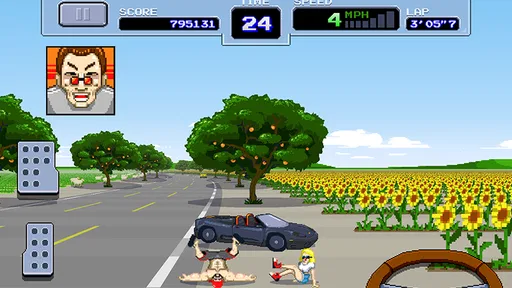
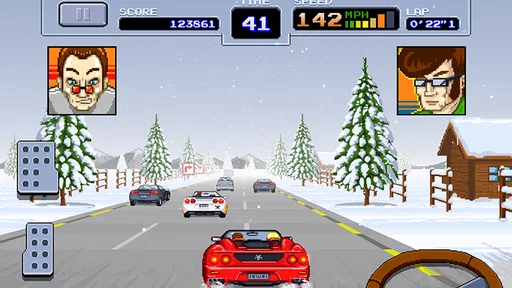
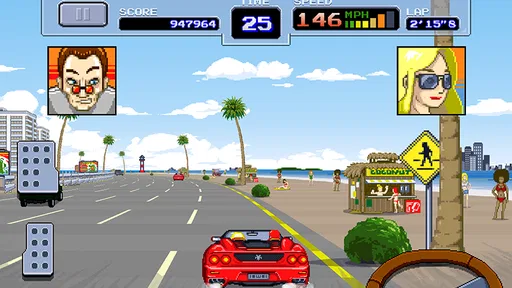
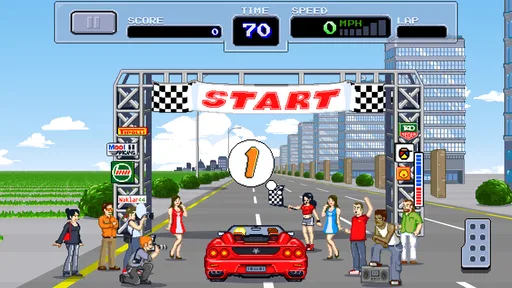
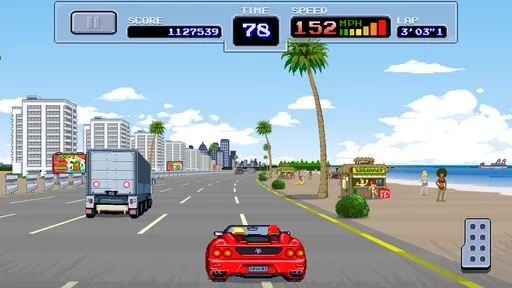
Our Review of Final Freeway 2R
 Analysis by Appyee
I keep coming back to Final Freeway 2R when I want a quick racing game that feels more like an arcade machine than a long-term driving simulator. It is a paid game from NEWTYPE, a developer from Japan, and its central idea is wonderfully direct: choose a character, get moving, and make decisions while the road keeps unfolding. There is no need to learn a complicated career structure before having fun. You can start a run quickly, make a few turns, and see how your choices affect the ride.
That simplicity makes it especially interesting on a shared phone or tablet. In my experience, it works well as a pass-around game because one person can finish a short attempt and hand the device to someone else without needing a long explanation. It is suitable for Everyone, but that does not mean every player will enjoy it equally. Younger players may like the bright, immediate racing, while older players may appreciate the old-school design and the pressure of choosing a route before the next stretch of road arrives.
How Final Freeway 2R fits into a shared household
The best household use case is a short break when several people want something interactive but nobody wants to commit to a long session. I can imagine playing it while waiting for food, passing the phone around during a trip, or letting different family members try the same route and compare their decisions. Because the game is built around driving and branching choices rather than a large collection of menus, a new player can understand the basic appeal almost immediately.
That does not make it a conventional multiplayer game. I would not buy it expecting everyone to race simultaneously on separate devices or to join an online room. Its value in a shared setting comes from taking turns, discussing which direction to choose, and seeing whether another player handles the road better. That distinction matters: it is a good social pass-and-play experience in spirit, but it should not be treated as a network competition.
For a family sharing one device, I recommend agreeing on a simple turn boundary before starting. A player can take one complete run, or everyone can play for a fixed number of attempts. Without that small rule, the person who enjoys arcade racing most may keep restarting to improve a result. The game itself does not need to provide household scheduling; the family can create a fair routine around its short-session design.
Another useful approach is to let different players choose different styles. One person might focus on staying calm and following the road cleanly, while another deliberately experiments with alternate directions. This turns the route selection into a conversation instead of merely a test of reflexes. It also helps a less experienced player feel that exploring is worthwhile, even when the run does not go perfectly.
What the first session feels like
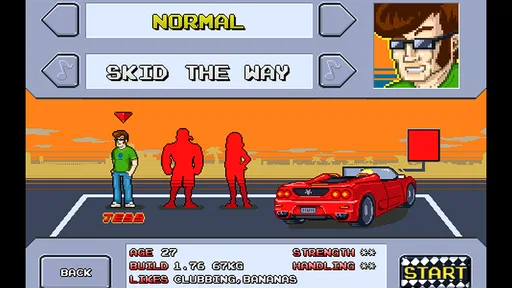
My first impression is that the game understands the appeal of classic arcade racing: the car is already part of an active journey, the road demands attention, and the fun comes from reacting rather than preparing. The store summary describes the freeway as yours, and that idea is reflected in the way the game puts the player in charge of both the character choice and the direction of the drive. It is a compact premise, but it gives each attempt a clear purpose.
The choice of character is not just a decorative opening screen in the way I experienced the game. It helps establish the sense that the run belongs to the player, even though the overall structure remains straightforward. I would not approach this as a realistic driving title with an extensive vehicle garage, tuning menus, or a simulation model. The appeal is the immediate road experience and the decisions made while moving.
That makes it easier to introduce on a shared device. I would show a new player how to begin, explain that the road is the main focus, and then let them discover the rest through play. A child who already understands basic touch controls may be able to start quickly, while a younger child may still need help with timing and with recognizing that a turn is a meaningful choice rather than a purely visual detail.
Boundaries before handing over the device
A paid download changes the household conversation in a useful way. Final Freeway 2R costs $1.99, so it is not dependent on a free-to-start routine to make its case. I find that easier to recommend to someone who wants a contained purchase rather than an experience built around repeated prompts to spend more. At the same time, a one-time purchase does not automatically make it the right choice for every family; the important question is whether the arcade format matches the people who will actually play it.
Before installing it on a shared device, I would check which account is being used for the purchase and decide who is responsible for managing the device. That is ordinary household organization, not a feature of the game. The title is listed as compatible with Android devices using version 7.0 or later, so an older phone may need attention before anyone expects to play. On a family tablet, checking the operating system first can prevent an avoidable argument about why the game will not install.
I would also separate the purchase decision from the question of who is allowed to use the device. The game carries an Everyone content rating, which makes it easier to consider for a mixed-age household, but parents and guardians still know their children better than a store label does. The rating describes the intended content level; it does not decide whether a particular child is ready to handle competitive frustration or the temptation to keep retrying.
There is another boundary worth setting: this is a game for driving-focused attention, not a background activity. If someone is using it while walking, crossing a street, or doing another task that requires awareness, the short-session format can become misleading. A run may be brief, but the player still needs to look at the screen and respond to what is happening. I prefer to treat it as a seated break rather than something to play while moving around the house.
Coordinating turns without making the game feel like homework
The game’s route choices create a natural way to coordinate a shared session. Instead of simply ranking players by who reaches the best result, I would ask each person to explain why they chose a direction. That gives the group something to discuss even when the runs are uneven. One player may value the familiar path, while another wants to see what happens after taking a less obvious turn. The conversation becomes part of the entertainment.
A useful household rule is to avoid giving advice during the most demanding parts of a run. Back-seat coaching can make an arcade game less enjoyable, especially for a child who is still learning the controls. I would let the player finish, then discuss the choice afterward. That preserves ownership of the attempt and makes the next turn feel like an experiment rather than an exam.
For a group with very different skill levels, I would avoid using a single leaderboard-style standard. A confident adult may naturally perform better than a child who is still learning to react, but that does not mean the child’s run was less valuable. Compare decisions, improvement, or willingness to try a different route instead. This is one of the stronger ways to use the game in a household: it supports brief shared challenges without requiring every player to have the same reflexes.
It can also work as a quiet individual game when the house is busy. I would use it during a short pause rather than expecting a deep, uninterrupted session. The straightforward structure means I do not have to remember a complicated story or rebuild a long setup after putting the phone down. That convenience is a real strength for people who want a racing game in small pieces.
Age, trust, and the limits of a simple rating
The Everyone rating is reassuring for families looking for a broadly accessible racing title, and the game’s presentation is easier to place in a shared environment than a mature action game. Still, I would introduce it with the same basic trust rules I use for any game: play in an appropriate place, respect the device, and stop when another responsibility needs attention. The rating does not replace those conversations.
For children, the main issue is likely to be control and frustration rather than unsuitable subject matter. Arcade racing can make a player want to try again immediately after a mistake. That urgency is part of the fun, but it can also lead to arguments over whose turn it is or complaints when a route choice does not work out. A timer or a fixed number of turns can help, especially on a shared tablet where several people are waiting.
I would be comfortable recommending it to a child who can already manage the device responsibly and understands that a game run ends when the run ends. For a very young child who needs constant help with every control, the experience may become more adult-guided than independent. In that case, a slower game with simpler interaction may be a better first choice, even though this title is rated for Everyone.
The same point applies to adults. An age rating does not tell me whether a game is satisfying for a particular grown-up. Someone who wants realistic handling, licensed cars, detailed upgrades, or a long progression system may find this too light. Someone who remembers arcade racers or simply wants a focused road game may find its restraint refreshing.
Three details that matter more than the store summary
First, the route choice changes the way I think about replaying a run. In many racing games, replay value comes from shaving time off the same course or collecting more vehicles. Here, the decision about where to drive gives a short attempt a different kind of tension. My practical tip is to avoid choosing automatically every time. On one run, follow the option that feels safest; on another, deliberately test a different direction. That makes the game feel more exploratory without requiring a large progression system.
Second, character selection gives a shared group an easy way to personalize turns. Rather than having everyone use the same opening routine, let each player choose a character and remember which choices belong to whom. It creates a simple identity for each attempt and makes it easier to discuss the results afterward. I would not claim that this replaces a full customization system, but it is a useful social tool when several people are taking turns on one screen.
Third, the game benefits from being treated as an arcade session rather than a permanent hobby project. Its version is 1.10.6.3, and the title has been available since Apr 14, 2012, but those facts do not turn it into a modern live-service racer. I would install it for the driving experience that is already there, not because I expect a constantly changing stream of content. That expectation is important when comparing it with newer free racing games that are designed around ongoing updates, events, and collection systems.
A fourth practical insight is about device handoff. If several people are playing on the same phone, give the next player a moment to settle their grip and confirm that the screen is responding normally before starting. Fast arcade controls can feel unfair when the device has just been passed from one person to another. This is not a hidden game feature; it is a small household habit that makes the experience noticeably less argumentative.
Where it stands beside other racing choices
Compared with a realistic racing simulator, Final Freeway 2R is much easier to pick up but much less interested in technical driving detail. I would choose the simulator for careful braking, vehicle setup, and a sense of authenticity. I would choose this game when I want the road to arrive quickly and the main decision to be what I do next. Neither approach is universally better; they serve different moods.
Compared with a large free-to-play racer, it is more contained. The $1.99 price makes the initial decision clear, while many free alternatives compete for attention through unlocks, timed activities, advertisements, or repeated progression goals. A player who enjoys collecting cars and returning every day may prefer those games. A player who dislikes that structure may appreciate paying once for a focused arcade title.
Compared with an endless runner, this game offers more of a sense of intentional direction. An endless runner often asks me to survive as long as possible while reacting to obstacles. Here, choosing a path gives the run a different kind of agency. I am not simply trying to last longer; I am deciding how the journey should continue. That is a small but meaningful distinction, especially for players who want more than reflex tapping.
Compared with a local multiplayer racing game, it is less about direct competition and more about shared discovery. There is no reason to buy it if the main goal is simultaneous racing with friends. I would instead recommend it to a household that enjoys taking turns, commenting on choices, and replaying a compact experience without managing a complicated group setup.
Who should install it, and who should skip it
I think it is a strong fit for someone who likes classic arcade racing, quick sessions, branching road decisions, and a game that starts without a long tutorial or career commitment. It also suits a shared device where different people want to try their own run. The average rating is 4.6 from around 815 ratings, with about 104 written reviews, and the game has passed 10K installs. Those figures suggest a small but clearly positive audience, which matches my impression of a focused title with a specific appeal rather than a universal racing platform.
I would skip it if you need online races, a deep garage, realistic physics, extensive accessibility options, or a long-term progression ladder. I would also skip it if your household expects every game to support several players at the same time. The route-based arcade format is the reason to choose it, but it is also the reason some players will find it limited after a few sessions.
Storage and compatibility decisions should be practical rather than assumed. Since the minimum Android requirement is version 7.0, I would check the intended device before buying, particularly if the family phone is older or rarely updated. On a suitable device, the $1.99 cost keeps the trial relatively simple: the real risk is not a complicated payment model, but discovering that the household prefers a different kind of racing.
My household verdict
Final Freeway 2R works best when I treat it as a shared arcade cabinet in miniature. It is easy to pass around, quick to explain, and interesting enough to support conversations about which road to take. The Everyone rating and modest one-time price make it approachable for a mixed-age household, provided an adult still sets sensible boundaries around turns, attention, and device use.
Its limitations are clear. It is not a realistic simulator, not a large collection game, and not a substitute for simultaneous multiplayer racing. The short, focused design may leave some players wanting more depth, while others will enjoy precisely because it avoids the clutter found in larger alternatives. I would recommend it to a friend who wants a compact, old-school racing experience with meaningful route choices and a good pass-the-device rhythm.
My final advice is to buy it for the road decisions, not for features it was never trying to provide. Give each household member a fair turn, let players make their own choices, and use the game as a brief shared challenge rather than a test of who has the fastest reflexes. In that setting, this racing game from NEWTYPE has a clear purpose and delivers it with welcome directness.
Verdict
Strengths of Final Freeway 2R
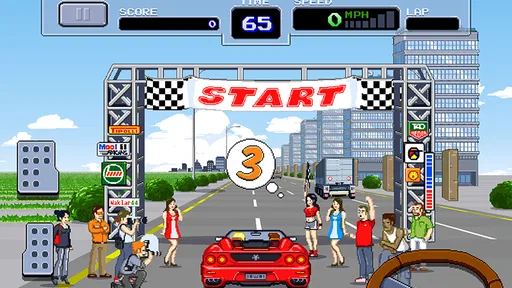
- Authentic 16-bit-inspired visuals capture the feel of classic arcade racers.
- Quick races make it easy to enjoy during short gaming sessions.
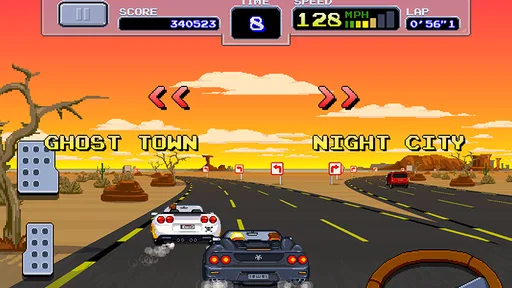
- Multiple routes and endings encourage replaying each run.
- Responsive controls feel natural on touchscreen devices.
- Retro soundtrack and sound effects complement the arcade presentation.
Limitations of Final Freeway 2R
- The game may feel repetitive once you have seen most routes.
- Pixel-art visuals may not appeal to players seeking modern graphics.
- Some races require practice to master turns and traffic patterns.
- Limited customization offers little progression beyond improving your runs.
- The fast pace can make touchscreen controls feel imprecise at times.
Similar Picks in This Category
View All
Hill Climb Racing
Fingersoft4.3

Dr. Driving
SUD Inc.4.2

Traffic Rider
skgames4.5

Asphalt 8 - Car Racing Game
Gameloft SE4.6

Race Master 3D: Car Racing
Beresnev Games4.6

Extreme Car Driving Simulator
AxesInMotion Racing4.3
Frequently Asked Questions
What is Final Freeway 2R?
Final Freeway 2R is a retro-style arcade racing game inspired by classic early-1990s highway racers. You drive through colorful roads at high speed, choose branching routes, avoid traffic, and try to reach the finish before time runs out. Its focus is on quick races, simple controls, upbeat music, and nostalgic presentation rather than realistic driving simulation.
How does the gameplay work in Final Freeway 2R?
The game is built around short, fast-paced runs. You steer through traffic, manage your speed, and select different paths at route junctions. Crashing into vehicles or roadside obstacles can cost valuable time, while reaching checkpoints keeps the race moving. The controls are easy to understand, but maintaining a clean line at high speed takes practice, especially on later routes and more demanding difficulty settings.
Does Final Freeway 2R work offline?
Yes, Final Freeway 2R is primarily designed as a self-contained offline arcade game, so you can generally play races without creating an account or maintaining a constant internet connection. This makes it suitable for commutes, travel, or quick sessions when mobile data is unavailable. Internet access may still be useful for downloading the game, receiving updates, or using platform-related services.
Is Final Freeway 2R suitable for children and casual players?
Final Freeway 2R is accessible to casual players because its controls are straightforward and races can be understood within minutes. However, the fast pace and frequent traffic require concentration, so younger players may need time to become comfortable with steering and route choices. It is generally family-friendly in presentation, with arcade-style action and no emphasis on realistic violence or complex simulation mechanics.
What should I know before downloading Final Freeway 2R?
You should download Final Freeway 2R if you enjoy compact arcade experiences, retro graphics, branching routes, and music-driven racing. It is not intended to replace a detailed modern racing simulator: customization, realistic physics, and extensive multiplayer features are not its main attractions. The game is best enjoyed in short or repeated sessions, where improving your route knowledge and driving accuracy becomes part of the challenge.
Play our best games!


